NASM
Smithsonian National Air and Space Museum
Capabilities
Content Development
Experience Design
Graphic Design
Narrative Strategy
Gallery Name: World War 1: The Birth of Military Aviation
Capabilities
Content Development
Experience Design
Graphic Design
Narrative Strategy
The Smithsonian’s National Air and Space Museum’s “World War I: The Birth of Military Aviation” brings this monumental conflict out of the shadows of its more well-documented successor with a sweeping new exhibit that includes remarkable artifacts and installations. The media we developed for the exhibition provides a human-centered way for visitors to experience this epic story, from what it sounded like in the trenches to witnessing how quickly innovation changed the trajectory of warfare–and flight–forever.
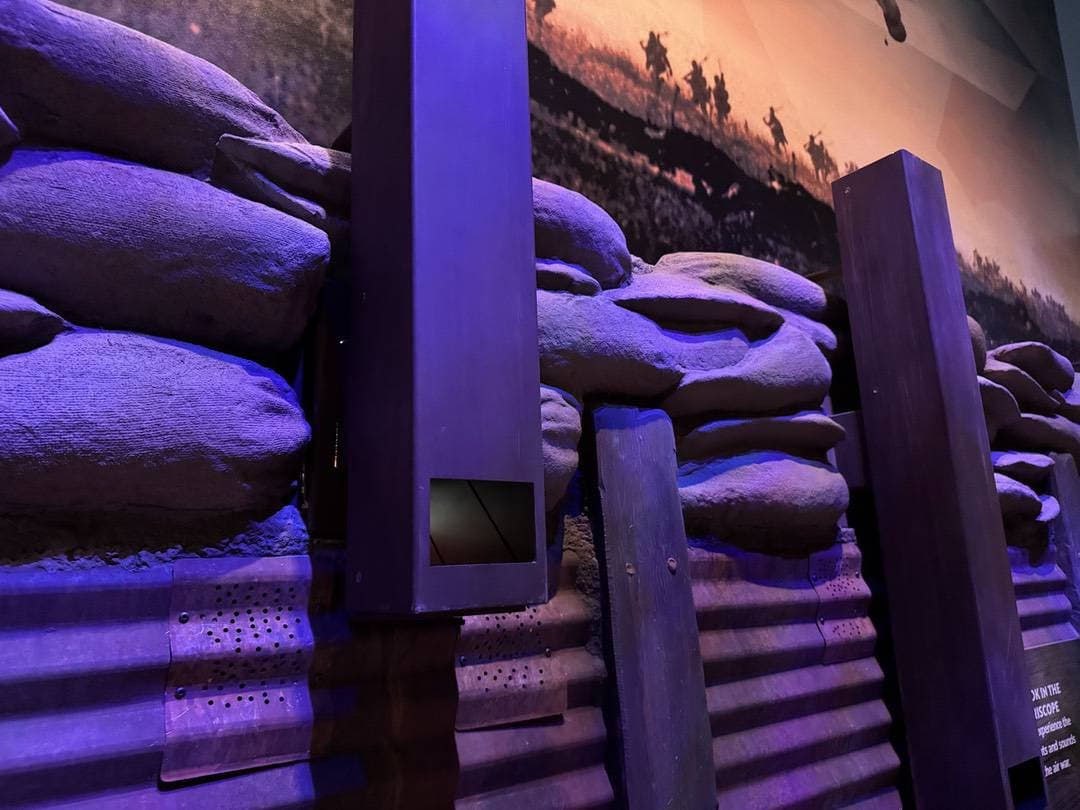
Trench Wall Periscopes
An airplane flies toward you, your trenchmates react in colorful period slang, an aerial dogfight unfolds through the lens of your periscope as the sound of gunfire approaches and a zeppelin is spike-bozzled out of the sky. These elements fully immerse visitors in trench warfare, creating an emotional buy-in that’s the difference between experiencing history and merely observing it.
Timeline
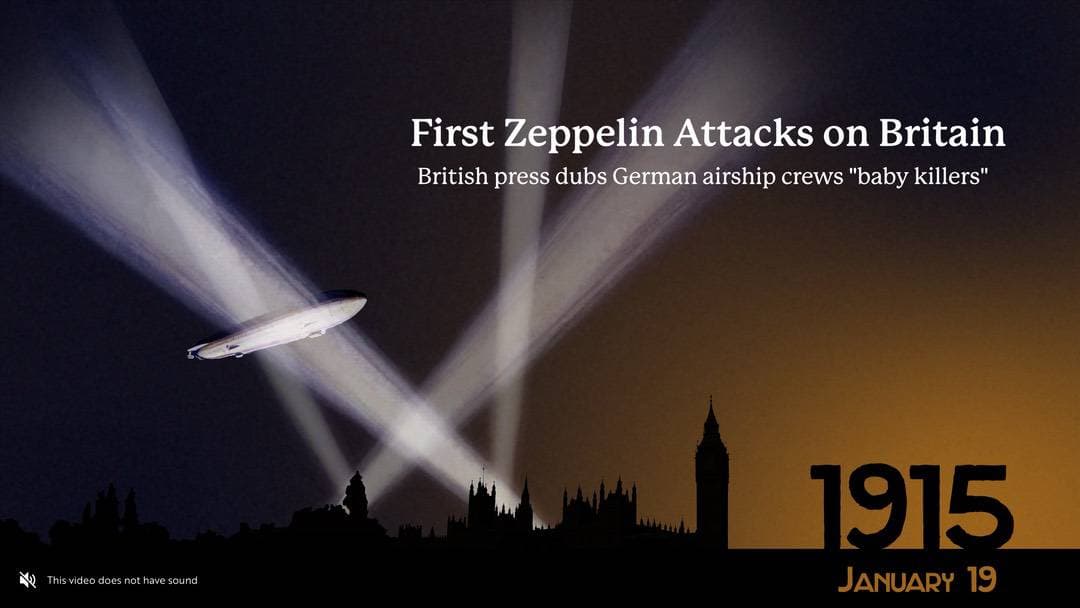
The first parachute, the first woman pilot, the sorrow and previously unimaginable scale of wartime loss. The animated timeline depicts these moments in a scale that matches the tremendous impact they had on the world while contextualizing the war-flown aircraft on display in the gallery.
Interwar Design
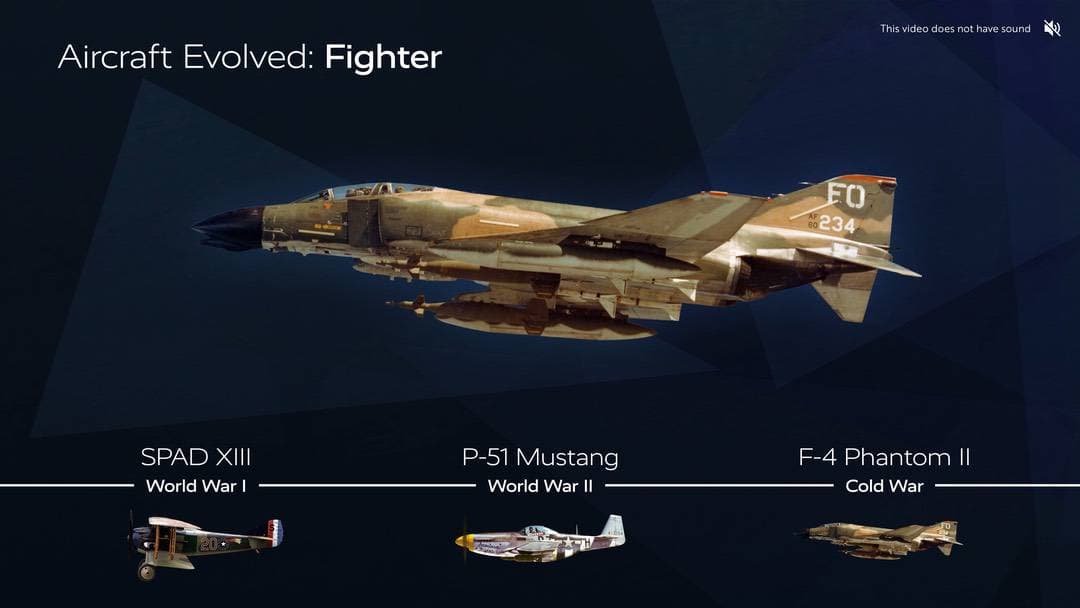
Today’s aeronautic advancements are rooted in hundred year-old World War I aviation technology. In this timeline, a continuous sequence of 3D motion graphics highlights the innovations that still shape flight today, connecting gallery artifacts to our present moment.
Gallery Name: Jay I. Kislak World War II in the Air
Capabilities
Content Development
Experience Design
Graphic Design
Narrative Strategy
The Smithsonian National Air and Space Museum’s newly opened Jay I. Kislak World War II in the Air gallery positions military aviation as an essential component of an Allied victory. We developed three media pieces that provide context for the grand machinations of this sweeping conflict while providing emotional touchstones that transcend time to resonate with today’s audiences.
World War II Introduction
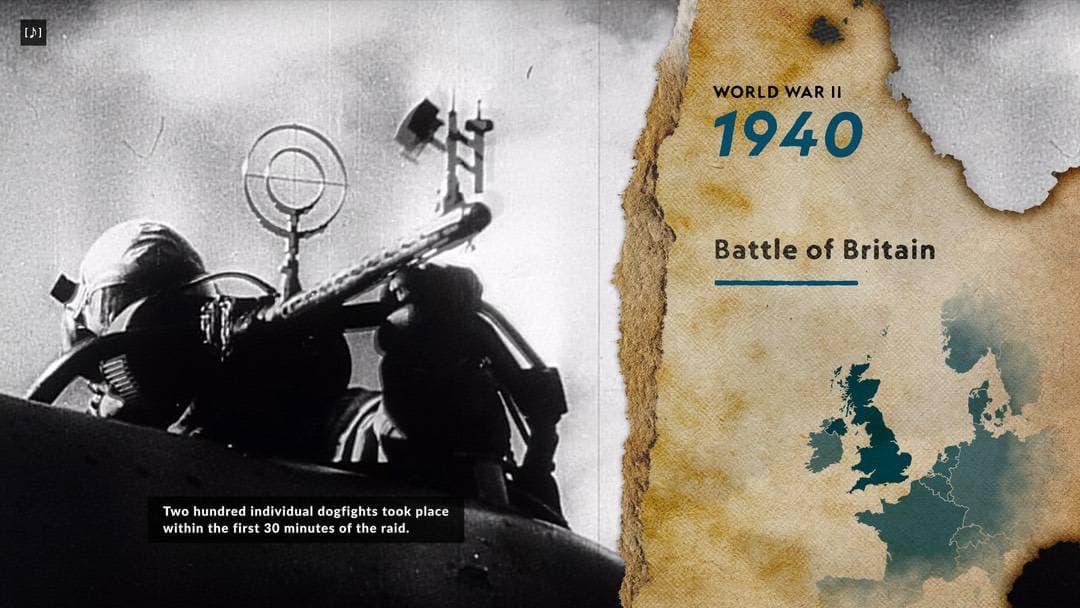
Positioned at the entrance of the gallery, this linear media piece distills complex global events into a clear narrative of the run up to WWII. This clarity primes visitors for the depth of artifacts and information in the gallery while stoking their curiosity to learn more.
More than an introductory history, the piece uses dramatic motion graphics and animated world maps cut with archival video and audio footage to depict the cause-and-effect relationship between isolated conflicts while evoking the anxiety of a destabilized world on the brink of war.
Development of the Atomic Bomb
This animated timeline adds insight to a well-known moment in history–the deployment of the atomic bomb over Hirsoshima–by centering the dramatic scale, scope, and speed of world events, scientific discoveries, and technological advancements.
Graphic design and narrative strategy align to create a clear informational hierarchy for each frame of this in-depth exploration that weaves together the Manhattan Project, development of the B-29 Superfortress, and global affairs. Bold graphic treatments enliven historical imagery to add impact and provide narrative cohesiveness.

The Tuskegee Airmen
This artful media collage treats archival footage with a deft elegance to create a sense of reverence for the bravery–at home and abroad–of the Tuskegee Airmen. Showcasing little-seen footage of this historic squadron’s day-to-day operations and training, the piece enriches the artifacts and stories in this section of the gallery with its warm emotional immediacy.

Gallery Name: At Home in Space
Capabilities
Video Editing
Graphic Design
Sound Design
Archival Footage and Asset Management
Newly reimagined with a focus on STEAM learning, the Smithsonian National Museum’s At Home in Space gallery explores nearly 50 years of the history and human experience of living and working in space. The two media pieces we developed give earthbound visitors a taste of the possibility, perspective, and poetry of life in low Earth orbit.
A Unique Laboratory
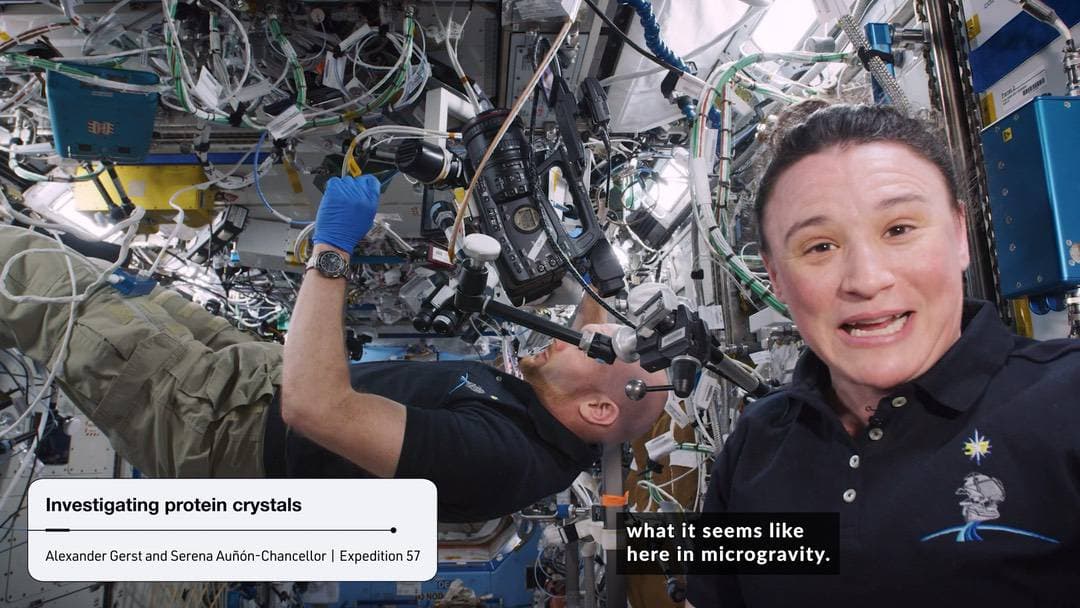
Located inside a mockup of the ISS’s Destiny module, this looping video highlights some of the most compelling experiments conducted aboard the International Space Station. Archival footage from different missions is edited for visual consistency and includes a mix of groundbreaking scientific research and more playful investigations–like how to bake cookies in microgravity. This variety illustrates the breadth of research possible in microgravity while inviting visitors to imagine what they would explore aboard the ISS.
Window on Earth
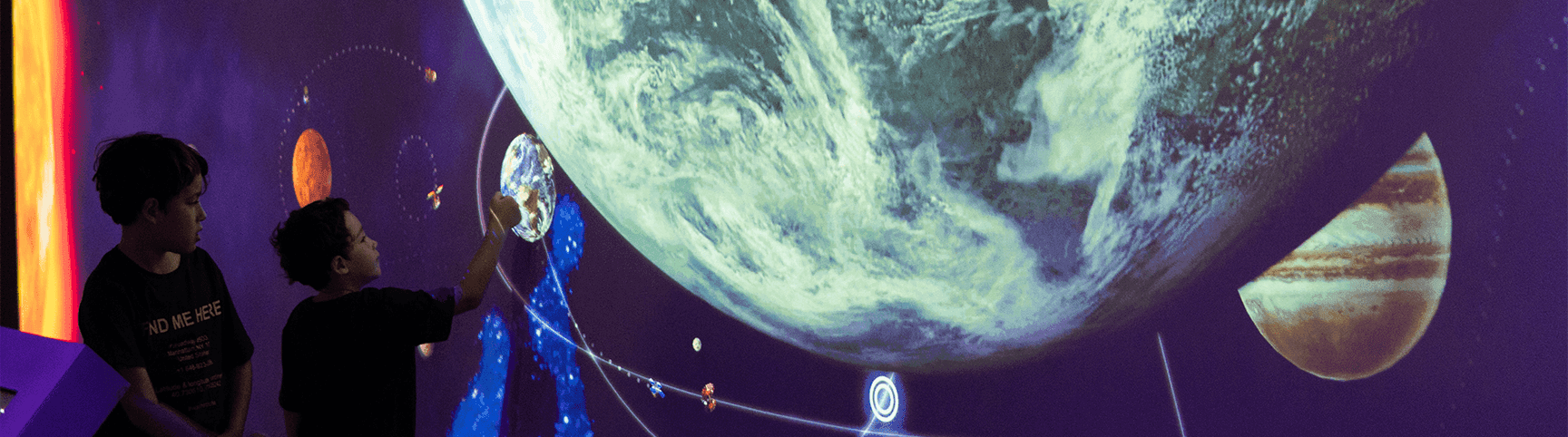
Projected in 4K on a 6’ circular screen, this over 7-minute montage of archival footage depicts an astronaut’s-eye-view of Earth as seen from the International Space Station. From Arctic icebergs to lightning storms over the Pacific Ocean, the eruption plume from Mt. Etna to sun glints on the Suez, this piece invites both the reflective meditation and spontaneous awe that comes from seeing our home planet anew.
.png&w=3840&q=75)
Gallery Name: U.S. National Science Foundation Discovering Our Universe
Capabilities
Custom 3D and CGI Animation
Sound Design
Video Scripting
Motion Design
Video Editing
Telescopes bring the wonders of the cosmos to us, tickling our intellect and inspiring our dreams. The U.S. National Science Foundation Discovering Our Universe gallery explores how these and other scientific tools advance our understanding of the universe. From the colossal scale of black holes to barely detectable gravitational waves, the birth of a star to how our universe might end, the four media pieces we created bring the science of the universe into focus for visitors of all ages.
Lifecycle of the Sun
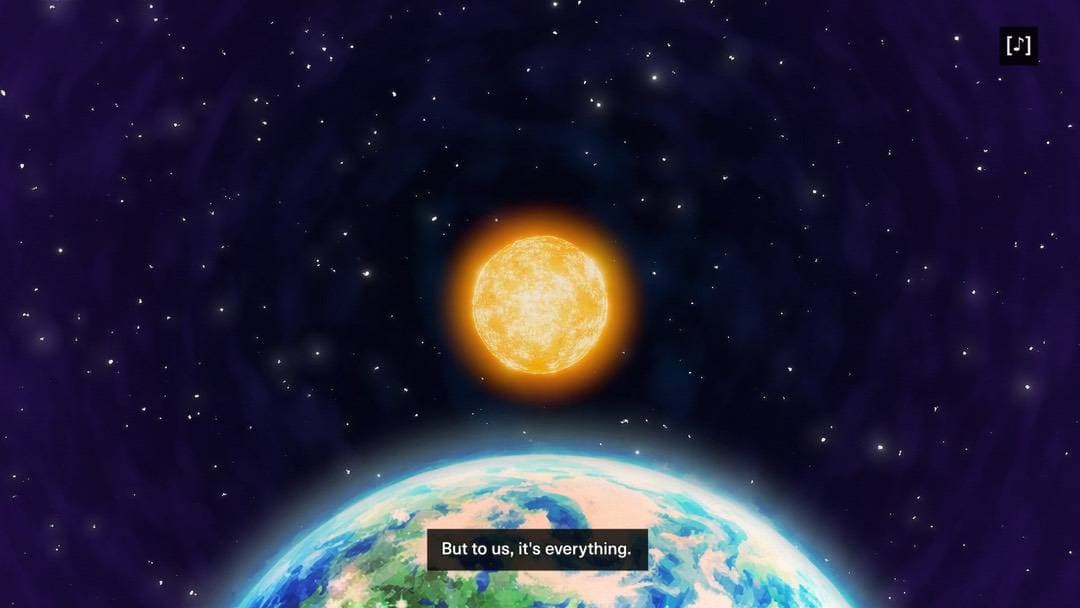
In the universe the Sun is just another star, but to us it’s everything. This linear media piece celebrates our earthly appreciation of the Sun while using it as a jumping off point to examine the birth, life, and death of all stars in the galaxy.
Richly textured simulations and custom motion graphics capture the magic of star dust while realistically conveying its gaseous composition, extreme heat, and immense mass. Artfully rendered star fields create an awe-inspiring backdrop and accurately depict the distance from and intensity of the stars relative to the Sun.
Three Possible Fates of Our Universe
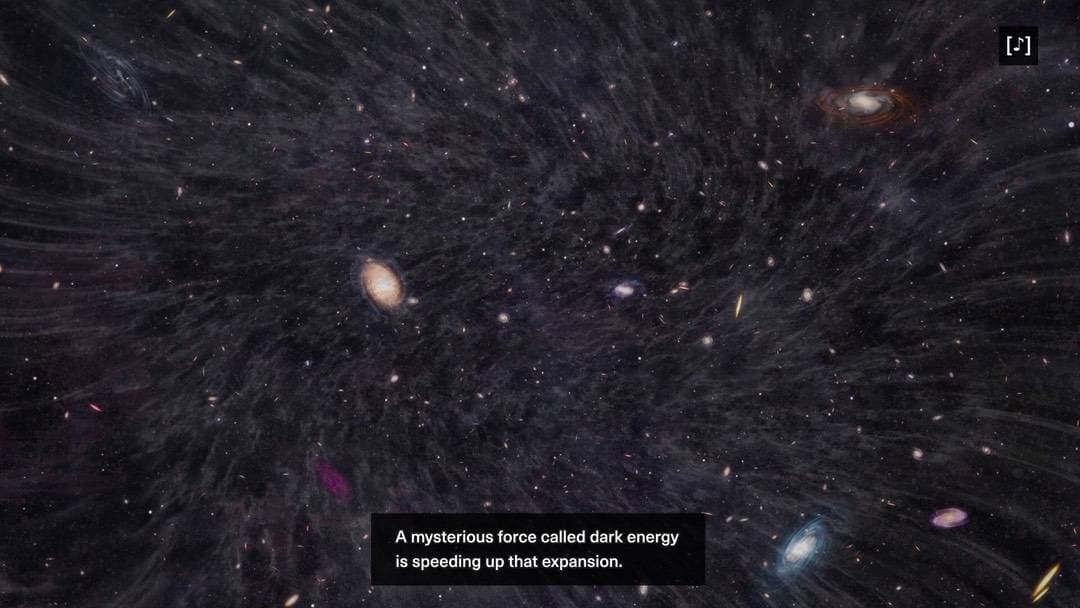
How might the universe end? Scientists aren’t sure, but dark energy, hypothetical models, and the reality of an ever expanding universe are part of the equation. Evocative sound and visual design create a sense of these vast mysteries while the piece itself examines the science behind these abstract concepts.
The script opens with a cosmic push and pull between gravity and dark energy, setting the stage for an epic battle that scientists believe may play out three different ways. Distinct title cards introduce each possible fate, while precise narration distills decades of research and advanced astrophysics into a clear, 2-line description of each hypothetical event.
Ripples in Space
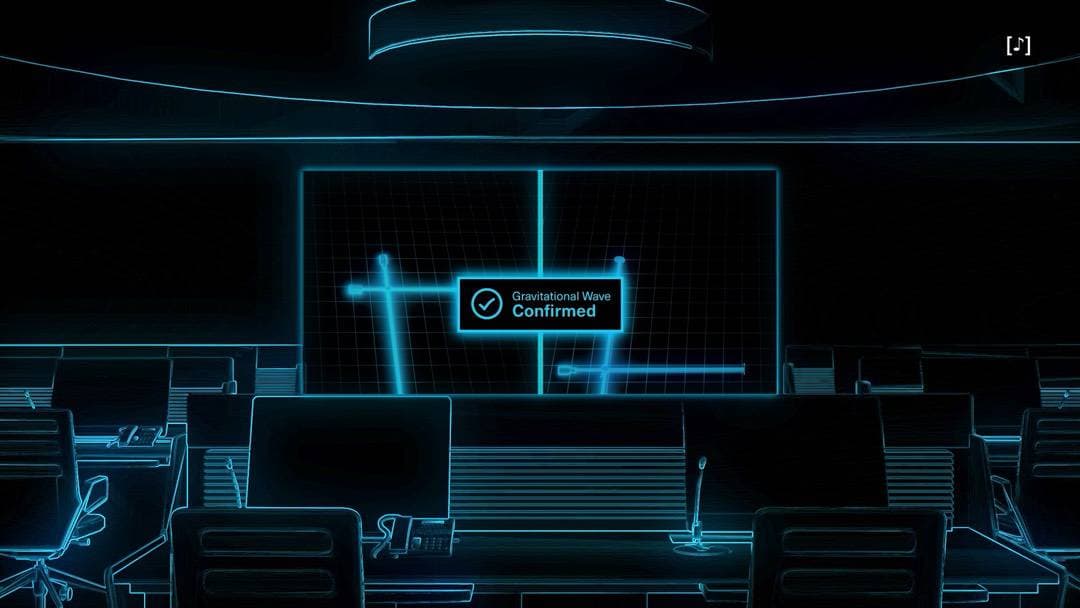
From the vastness of the universe to microscopic waves smaller than the diameter of a molecule, this piece helps visitors perceive what can’t be seen with the human eye. CGI and 3D animations trace the journey of gravitational waves from their formation in the deepest reaches of space to their remarkable detection at observatories here on Earth.
Custom graphic overlays enhance and explain the inner workings of the Laser Interferometer Gravitational Wave Observatory (LIGO) to show how scientists proved the existence of these waves, which Einstein predicted 100 years ago.
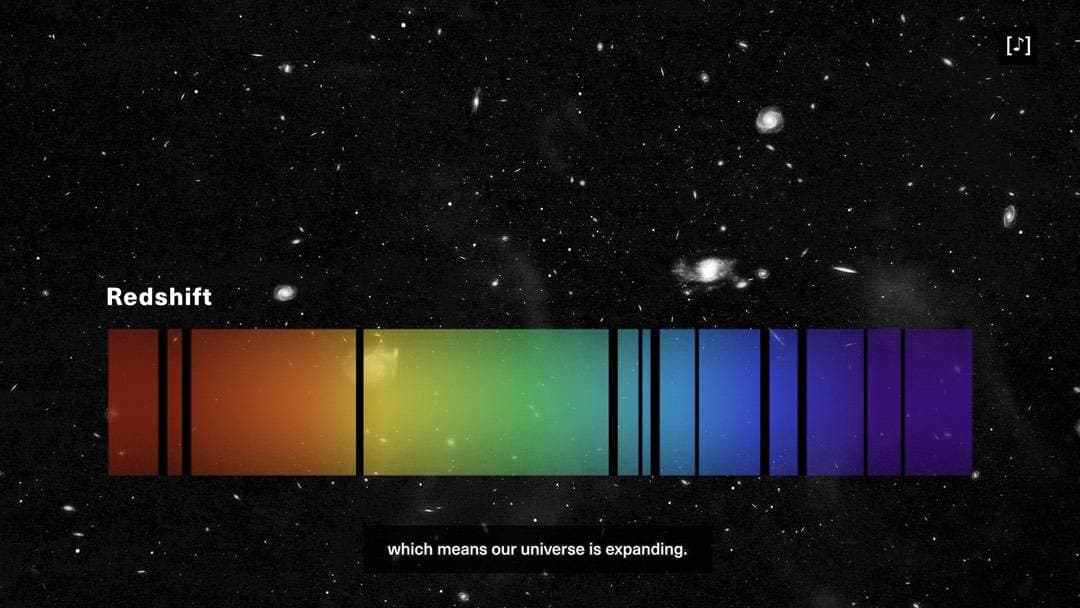
Redshift Reveals Motion
To understand redshift is to know the universe is expanding. It’s a conceptually demanding leap, but this media piece closes the gap with careful narrative sequencing reinforced with supporting graphics.
Over just a few well-structured beats, viewers get the foundation they need to understand what redshift is and how it reveals motion–from the physics of lightwaves to the relationship between wavelength, motion, and color. An animated spectrograph shows how this tool makes redshift perceptible to the human eye. By the end of the piece viewers are primed for their own aha moment of scientific discovery when they realize redshifting galaxies mean our universe is expanding.